12 Homesteading Kitchen Skills to Learn in 12 Months or Less
If you have goals that have anything to do with homesteading or gardening, then you will need to know what to do with all the food you are going to grow and raise. These 12 Homesteading Kitchen Skills to learn in 12 Months or Less can be used whether you have land or not!
This post may contain affiliate links. When you shop through them, I may earn a small commission that blesses our large family at no extra cost to you. Thank you!
Hi, I’m Priscilla!
As a young, growing family facing job loss in 2013, with a toddler and a newborn baby, I wanted to learn how to grow food to supplement our rising grocery bill, but I had no experience. So, I called on my mom to help me start my first garden as cheap as possible. I remember her stewarding a small garden from time to time when I was growing up. We started one with blocks, soil, seeds, and a few starters that she helped me invest in. And that’s how I started!
Before I was a homesteading, homeschooling mom I was a professional musician and music teacher. I carried over my teaching experience into homeschooling my children, but I learned it was much different teaching your own children. And, when I started homesteading, I started with NO experience. It was something I never imagined doing. I had to do a lot of researching and learning each season. So, I know how hard it is to start homeschooling and homesteading with no experience!
After 2020
After the events of 2020, we saw the vital need to learn to grow, raise, and store real God-given food in abundance, and continue homeschooling all of our children. We felt God had a new call and season for us. So in 2021, we left everything behind, and moved from northwest Indiana to southern Georgia. And we just got started!
How we can help you
Now, I’ve homeschooled for 11 years and have 6 children of homeschool age with 1 more in waiting. And, we established our homestead in 2021 with lots of research and no experience. We built up gardens and livestock and had a small farmstead business within 2 years. We stewarded a small farmstead by selling fresh eggs and healthy chickens to many happy customers!
Also, we started taking and completing several homesteading courses by experts at the School of Traditional Skills, and we continue our education every year. And, I’m always looking for ways to make things more time efficient by making them simpler to do and sustainable. When things are simpler, they are more sustainable in our already full lives.
But, an unexpected turn of events landed us in a rental home in an HOA neighborhood while we search for land. We proved to ourselves that we could still homestead even with all the restrictions. We knew if we could do it, others could do it too! So, we started this blog and our newsletter to equip modern families to live abundantly in their homesteads and homeschools no matter where they live and with no overwhelm or burn out. NO EXPERIENCE NECESSARY! We offer and affordable solutions, free printables, resources, and encouragement for your Christ-centered beginner homesteading, homeschooling journey.
Why is it important to learn homesteading kitchen skills?
If you have goals that have anything to do with homesteading or gardening, then you will need to know what to do with all the food you are going to grow and raise. Without a plan for the food grown and raised, someone could easily get overwhelmed, lose produce, waste money, and become discouraged. One of the things we try to do here, is to help beginner homesteaders do things without the overwhelm that can lead to quitting the lifestyle altogether.
So, learning these homesteading kitchen skills is vital to prepare and preserve the food you will grow and raise, so that your family has healthy food and a prepared pantry no matter what the future holds. And, Homesteading Kitchen Skills are skills that can be learned anywhere whether you have land or not.
How can these homesteading kitchen skills be learned in 12 months or less?
So, the idea is to learn 1 homesteading kitchen skill per month. And then, to build on that skill each month by adding another that follows it, or by learning a new skill in the kitchen. You can follow this exact order of skills, which is our recommended flow, or you can move the skills around according to what you have and what you can do. You may know some of these skills already, so you may need to start somewhere else in these steps. Use this as a guideline and make it work for you. At the end, we will include some ideas of other homesteading kitchen skills that can be learned in case you already know some of these and still want a 12 month plan to help you grow your skills.
Some of the later skills, and added skills, may require an investment in equipment to get started in that skill. Some of the investments are smaller, and some are larger depending on what you decide to do. However, we find that these 12 homesteading kitchen skills are some of the basics that we believe will set you and your homestead up for future success.
Here are the 12 Homesteading Kitchen Skills to Learn:
12 Homesteading Kitchen Skills to Learn:
Month 1- Prepare your pantry
Preparing your pantry is a pre-cursor to the next one of the homesteading kitchen skills to learn which is cooking from scratch. But, it can take time to prepare your pantry depending on what you are starting from and what your budget is. The key to learning to cook from scratch, and continuing to, is to always keep a well-stocked pantry. We call it an “ingredient household”.
It’s fine to have boxed pasta and frozen sides and meals for emergencies, but learning to cook foods and meals from scratch will save you a lot of money, save your health, and be a useful skill to whip anything up from common ingredients if that’s all you have. You will discover that stocking up on basic ingredients is actually more convenient than convenience foods. And, of course, healthier! Cooking from scratch is even considered a survival skill.
Remember 2020 when stores were out of bread? And then, they were out of yeast. So, people had to learn how to make sourdough bread, and it became a “trend” to learn this age old skill that was actually helping people feed their families. This is not at all an exhaustive list, but here’s some staples to get you started:
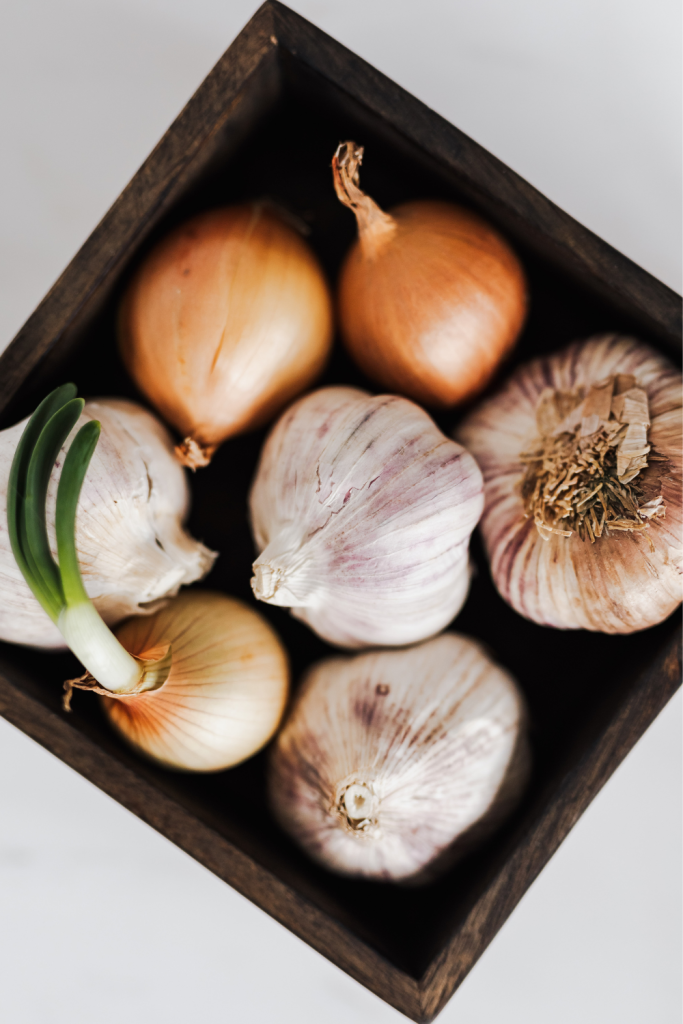
Pantry Staples:
- flour
- wheat berries
- sugar
- salt
- cinnamon
- pepper
- herbs
- other spices
- pasta
- pasta sauce, or just..
- canned tomatoes (you can make almost any tomato sauce or product from this)
- canned fruits
- canned veggies
- baking powder
- baking soda
- yeast
- olive oil
- coconut oil
- apple cider vinegar
- white vinegar
- onions
- garlic
It may take a month (or more) of buying and stocking up on ingredients to prepare your pantry for moving into learning to cook from scratch. You can buy a little bit each week by setting aside a part of your grocery budget for low-cost ingredients or canned foods to start building up your pantry right away. Stock up on basic ingredients to prepare your pantry as the first of the 12 homesteading kitchen skills to learn.
Month 2- Cooking from scratch
The average American household spends about $6,000 a year on food with an average of $2,700 spent on eating out! That is almost HALF of the average yearly amount spent on all food! Another source actually says that an average of over $7,300 is spent on food per year per U.S. family. So, half of that would be over $3,500 spent on eating out. Oh my, I think this information is a motivating reason to start to cook from scratch. Read more ways to save money here.
Ready-made and frozen meals from the grocery store, and fast foods, are also sources of highly processed and genetically modified ingredients. But they aren’t just unhealthy, they add up to higher grocery bills and more money spent per year. People think that they are saving money by buying cheap ready-made or frozen meals for their family. I personally don’t want to trade my family’s health for the appearance of convenience or low-cost. What people don’t realize is that cooking everything from scratch actually ends up being MUCH cheaper. You can even grow many of your own healthy ingredients!
Buying healthy or organic
People also believe that they cannot afford to buy healthy, organic, safe ingredients to cook their meals from scratch. This will vary. Healthy seafood and pasture-raised meats can be more expensive than regular products. But the trade off is in buying ingredients for your sides, cooking from scratch, and growing as much food at home as you can. You can also raise your own meat, if you live where you can.
Cooking from scratch makes room in your grocery bill for organic ingredients, pasture-raised meats, and other items you may desire, and it’s healthier. Start learning to cook from scratch by just learning a recipe at a time. Replace one convenience food or meal at a time. Make meals focused on meats and vegetables. Make homemade noodles. Bread is a great place to start. Learning to cook from scratch is one of the most basic and essential homesteading kitchen skills to learn.
Bonus Tip: Cook from scratch with Seasonal Produce
Cooking from scratch with seasonal produce will save you even MORE money. In-season produce will have low prices and sales, but if you are growing food or will grow food in the future, it is good to start practicing cooking with produce that is in season. Then, you will be prepared and know how to cook with produce that is in season when you are growing an abundance of it.
Note on Meal Planning
Meal planning is another essential skill to learn in the homestead kitchen. However, we wanted to focus this post on homestead focused skills that directly have to do with the creation of and production of food. That being said, we talk a bit more in-depth about the importance of learning good, but simple meal planning in our post 12 Simple Meal Planning Tips from a Homesteading, Homeschooling Mom of 7 for Stress-Free Meal Planning.
Month 3- Baking from scratch
Baking from scratch is another basic, yet essential homesteading kitchen skill to learn. In 2022, U.S. households each spent an average of over $700 on cereals, breads, and bakery products. I don’t know about you, but I could use an extra $700 a year! This is INSANE to me. Baking all bread, bread products, and desserts at home is one of my favorite ways to save money as a large family. First off, I did not start baking bread to save money. I made a commitment to baking all of our bread products and desserts at home after learning about all the harmful genetically modified and highly processed ingredients in these store-bought products. One of the reasons we started homesteading and growing food in the first place. (Get our simple bread recipe in our free printable library!)
Once we stopped buying these products, and started making them at home, we immediately saw a large decrease in our grocery bill. You will especially see a decrease if you were trying to buy “healthier”, organic, or “natural” products in the bread and dessert family.
Bread is one of the first recommended food items to learn how to bake at home from scratch. Other easy bread and dessert products you can switch out for healthier and cheaper homemade products are: noodles, crackers, cereals, granolas, breadsticks, biscuits, pancakes, cakes, dinner rolls, and more! Baking from scratch is another one of our favorite homesteading kitchen skills to learn.

Month 4-Sourdough
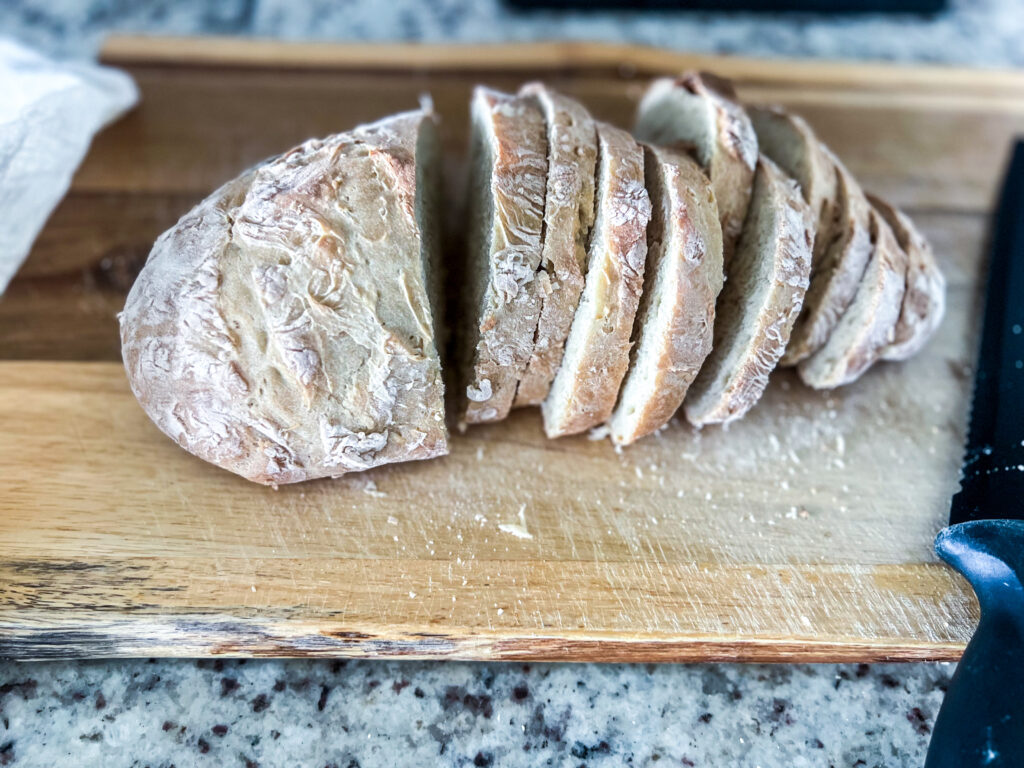
After learning regular bread making, we learned to make sourdough bread and sourdough products. Sourdough bread making is another great skill to save even more money for your family, but it is also so much healthier than regular yeast breads. Sourdough bread and products contain probiotics and other properties that help the bread to be more digestible for your body. Starting a sourdough starter takes at least 7 days, and it will take some time to learn making a simple sourdough loaf. Focus on that for one month and you’ll have a great start in sourdough to build upon in future months.
Learn all the things about sourdough here in this Simple Sourdough course by Lisa Bass. She also has a lot of free information on her website farmhouseonboone.com, but her course is an inexpensive and credible place to learn it all in one place from an expert. You can also learn about sourdough and most of the skills we are talking about today (as well as many more homesteading skills) at the School of Traditional Skills. They are our MOST Recommended resource! Either way, baking with sourdough is one of our recommended homesteading kitchen skills to learn.
Month 5- Render Bone Broth
Rendering bone broth is so simple to do and uses ingredients that you probably already have around. Especially if you worked on preparing your pantry in number one. You are basically going to keep the bones from any cooked meats you make, or buy, or uncooked bones that you separate from meat. You can also purchase bones or soup bones from many butchers. Uncooked bones can usually be rendered twice, and cooked bones usually can be rendered once. This will vary.
There are many ways to render bone broth. The simplest way we do it is to throw bones in a crockpot with an onion cut in half, peppercorns, red wine vinegar (for red meats) or apple cider vinegar (for poultry and pork), and herbs or other veggie scraps on hand. (I’ve used parsley, basil, thyme, cabbage, carrots scraps or greens, scraps of lettuces, sauerkraut, liver, gizards, hearts, and more.) Then, we cover the ingredients with water, set the crockpot to low and let it render for at least 14 hours. Easy. And, after straining the broth into an air tight container, I cover the leftover items with water, and render it again.
Bone broth is full of nutrients and collagen. It is so simple to make, and home-rendered bone broth is nutrient-dense making it one of the easiest homesteading kitchen skills to learn.

Month 6- Fermenting Foods
Fermenting foods is another simple way to add nutrients and probiotics into your family’s diet, as well as preserve food. Fermenting foods is inexpensive and usually just requires a glass jar and lid, water, and salt for the food you want to ferment. Herbs and spices can also be added for more flavorful creations. After food is fermented at room temperature for the proper amount of weeks, or to your taste, then ferments store long in the refrigerator.
For fermenting recipes, we recommend using a well-tested recipe from an expert like Lisa Bass. Lisa Bass is the expert we learned from for sauerkraut, fermented carrots, and much more. She has a course on fermenting foods called Fresh Ferments. Since fermenting foods is easy, super healthy, totally inexpensive, and a way to preserve food, we believe it is one of the essential homesteading kitchen skills to learn.
Month 7- Freezing Foods
I am a fan of freezing food as a method of preservation. Freezing food is simple and quick and offers some shorter term options and some longer term options. We do not like to solely rely on freezers since power can go out. In our area, we have lived through hurricanes the last few years that have caused damage and outages. However, we have a generator and have not (thankfully) had to deal with our freezers defrosting. Also, with a productive and full life, freezing has proved to be one of the quickest ways I can preserve food. There are mainly two ways of freezing foods. The two methods of freezing foods are Flash freezing and Blanching and Freezing.
Flash Freezing
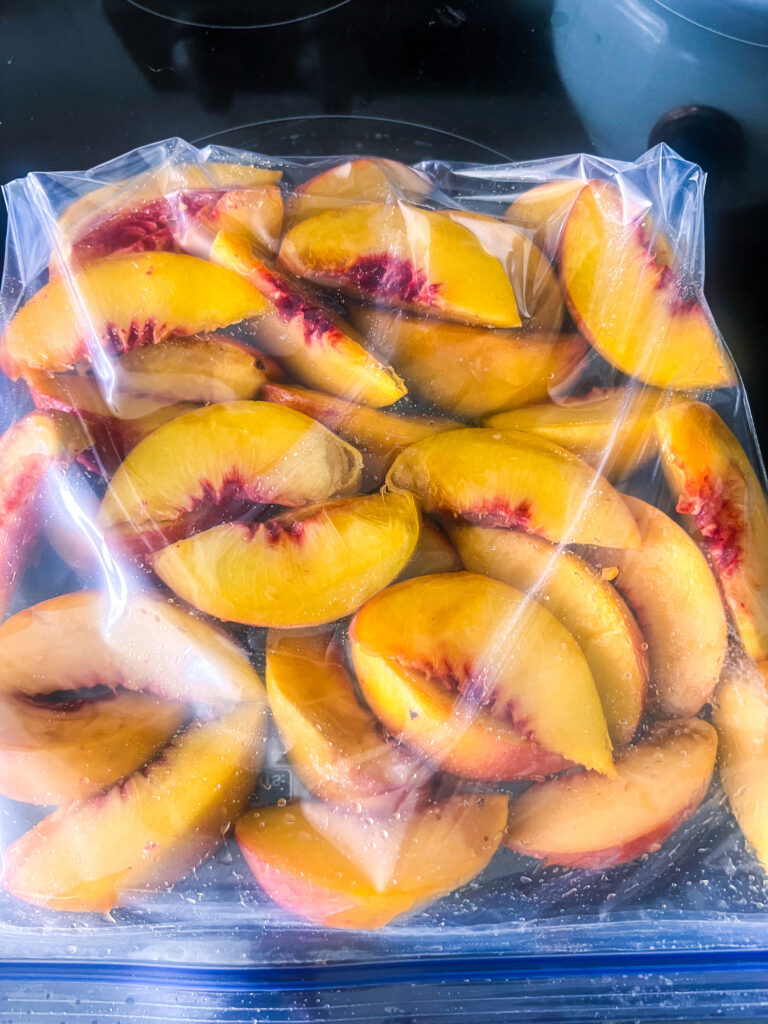
Flash freezing is basically just washing and prepping your fruits or vegetables, freezing them in a single layer on something like a cookie sheet for a few hours, then transferring them to a freezer-safe container or freezer bag. However, there are a few different ways to do this and will depend on the fruit or vegetable you are freezing. Flash freezing is NOT recommended for every fruit and vegetable, so do your research.
There are also options within flash freezing. Depending on the fruit or vegetable, you can leave peels on or off, slice or dice, add lemon juice to prevent browning or not, and you can freeze them as is after flash freezing or add a simple syrup to your freezer container or bag with the food. Some quick and easy fruits and vegetables that can be preserved safely by flash freezing are berries, peppers, garlic, ginger, and onions. So, to start you may want try flash freezing strawberries or blueberries, bell peppers, jalapeños, and onions. Foods that are preserved through flash freezing usually store for up to 3 months in the freezer. Flash freezing is one of my most used homesteading kitchen skills.
Blanching and Freezing
Blanching before freezing is another freezing method of preservation. Taking a little extra time to blanch the food before freezing, we read, will actually make the food last up to 6 months in the freezer instead of only 3. Some fruits and vegetables can ONLY be preserved by freezing if they are blanched first. So, again, always do your research. Blanching also helps the peels come off easily, which also helps certain fruits and vegetables store longer. We like to designate some of our bulk produce to be eaten within the first 3 months after preserving, and designate some that will last up to 6 months. So, we like to use both methods of freezing to preserve our food. Since some foods must be blanched before freezing, this is another skill recommended in our homesteading kitchen skills to learn.
Month 8 and 9- Water-bath Canning and Pressure Canning
If you follow any homesteader on any platform, I’m sure you’ve seen them can foods or you’ve seen their pantry full of canned items. Or, maybe you had a family member that you watched can their own foods. Canning is one of the most common skills to learn on a homestead because it is a shelf-stable and self-sufficient way to preserve food. You want to be able to preserve the food you buy, grow, and raise so you are always prepared. This makes this one of the most important homesteading kitchen skills to learn.
What is canning?
Wikipedia says, “Canning is a method of food preservation in which food is processed and sealed in an airtight container (jars like Mason jars, and steel and tin cans). Canning provides a shelf life that typically ranges from one to five years,[a] although under specific circumstances, it can be much longer.[2]” Canning food is a great way to build up your pantry with food that can last a long time. You can buy food in bulk and can it, or can your own harvest using this method of preservation. There is water-bath canning and pressure canning. And, both are important homesteading kitchen skills to learn. To learn both forms of canning, we always recommend the National Center for Home Food Preservation‘s website. But, for step-by-step video lessons from experts, we recommend the School of Traditional Skills.
Month 8- Water-bath canning
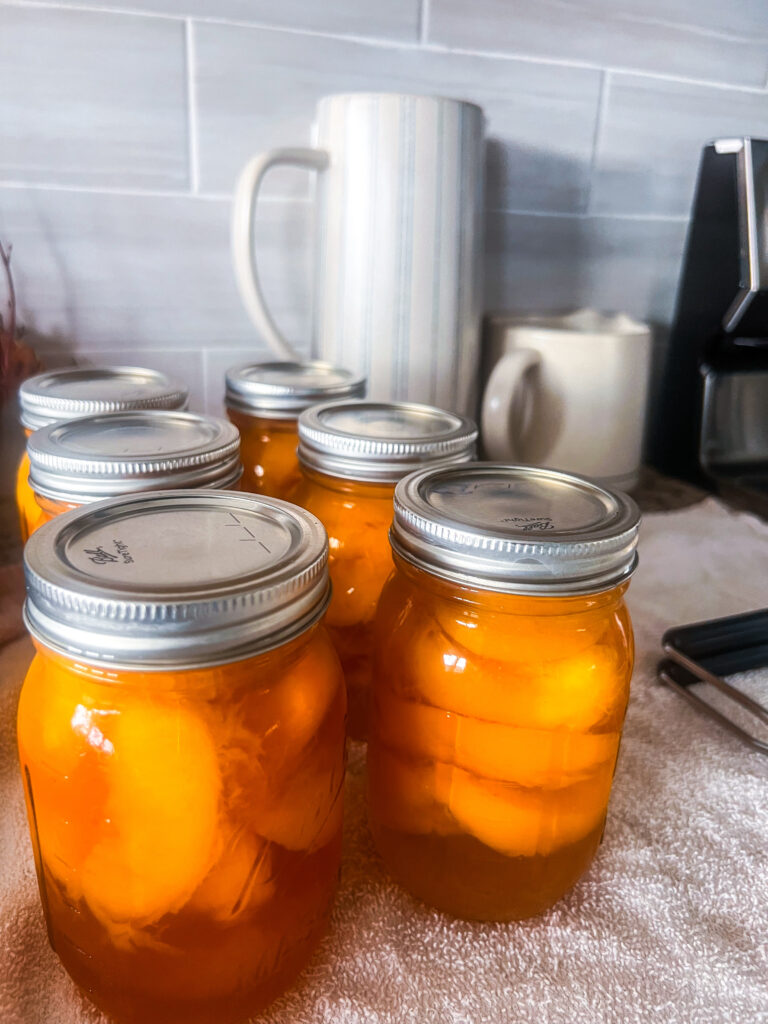
“Water-bath canning is only for produce that is HIGH in acid. We’re talking about tomatoes, berries, fruit, sauerkraut, and pickled vegetables. This means water-bath canning is for making jams, jellies, and pickled veggies. Their natural acidity—in addition to time in a boiling water bath—helps preserve them safely without the use of high pressure, although you’ll still need to take some precautions,” states (Almanac.com)
With canning and other food preservation methods, we always recommend that you read and learn on the National Center for Home Food Preservation‘s website. They have information and approved guidelines for preserving and storing food all for free. We use their website every time we can food for safety guidelines and times of processing. Pick one food to learn to water-bath can this month. If you want to get more comfortable with the process, pick another food to water-bath can, and you’ll have two types of foods in several jars on your pantry shelf that you didn’t have before!
Month 9- Pressure Canning
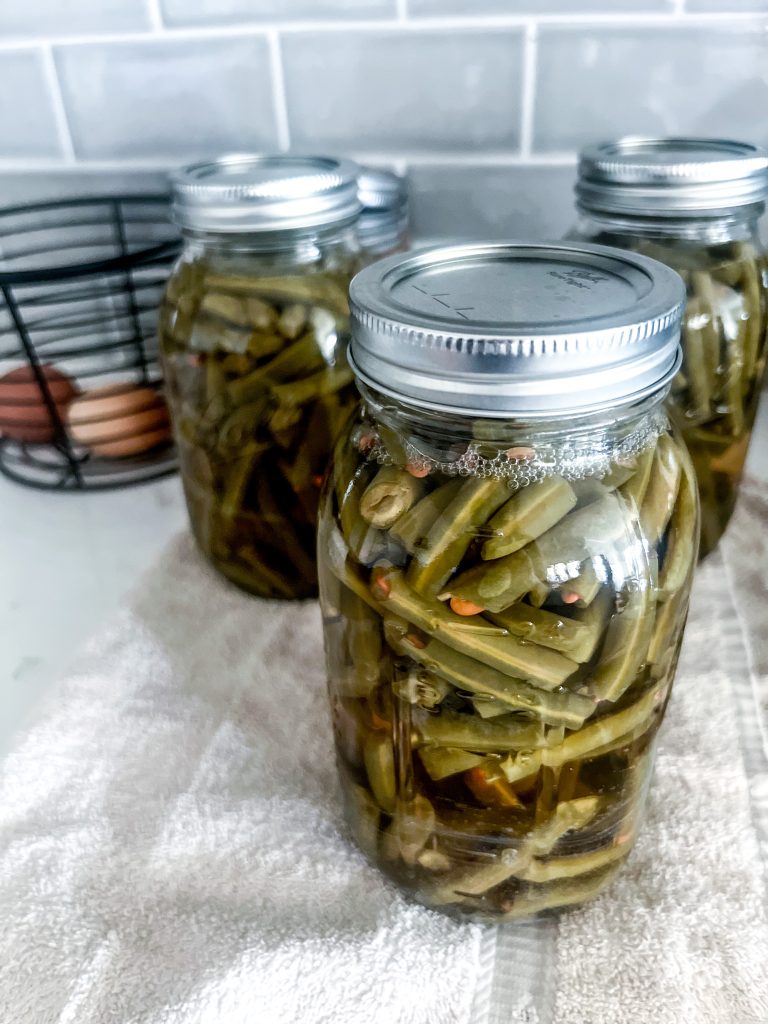
Pressure canning may be another method of food preservation that you have seen homesteaders use. It is another shelf-stable and self-sufficient method of food preservation, but this method is for foods with low acid. Think most vegetables, meats, and meals. So, this is another one of the homesteading kitchen skills to learn. We like Michigan State University‘s explanation of pressure canning:
“Pressure canning, using a dial gauge or weighted gauge pressure canner, is the only method recommended by the U.S. Department of Agriculture (USDA) for safely canning low-acid foods such as vegetables, meats and fish. Low-acid foods must be canned at a temperature of 240 degrees F or higher and held there for the time specified in the recipe to destroy the bacterial spores naturally present in these foods. Pressure canning uses pressurized steam to reach this superheated temperature. This pressurized heat destroys the potentially harmful bacterial spores, which can cause botulism. As the jars cool, a vacuum is formed, sealing the food in the jars and preventing any new microorganisms from entering and spoiling the food.”
Pressure canning has more steps, and involves more safety measures. So, this is definitely recommended to use the National Center for Home Food Preservation‘s website for guidelines on time, pressure, etc. However, don’t let that keep you from trying it at all. We recommend choosing a vegetable that your family loves, buy it in bulk on sale or in season, and try pressure canning in smaller batches (less jars) on multiple occasions throughout the month to get used to the process. Canning is definitely a buildable skill and one of the most essential homesteading kitchen skills to learn.
Month 10- Make Butter
Butter is like a life necessity! Okay, maybe we shouldn’t go that far. But, butter is used in tons of recipes, used for frying, on bread, and more. Our family of nine uses butter multiple times a day. After learning about the extensive list of benefits of raw milk dairy as opposed to pasteurized dairy, our family made the switch. We are not going to cover the benefits of raw dairy here, but if you are not familiar with them we encourage you to research it! I was determined to figure out a way to make butter at home without any expensive investment. So, I did. Plus, making homemade butter also means getting fresh buttermilk!
Read my post here to learn how to make butter. It’s so easy and fun, your whole family will want to join in! Because of its simplicity and necessity, I voted making butter as one of the 12 homesteading kitchen skills to learn.

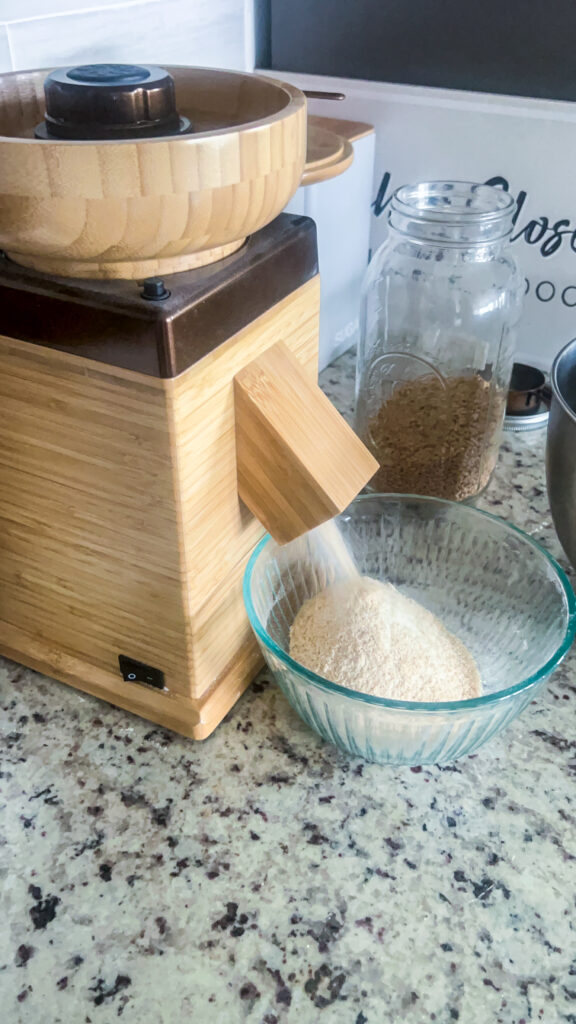
Month 11- Milling Grains
Milling grains is not just a trend; pre-made bread in a grocery store was. Since the beginning of time, humans were milling grains and baking with it. When you are ready, go a step further than bread making and sourdough and learn how to mill your own grains at home for the healthiest, most nutrient-dense products, as well as the most cost effective. Fresh milled wheat is said to have about 40 of the 44 most vital vitamins and nutrients our bodies need. When you use freshly milled flour, desserts are no longer a junk food, they become a superfood! Another brownie? Why, yes, thank you!
Also, you can store wheat berries for years, and they are way less expensive to buy. The initial purchase of a quality grain mill is an investment, and you can make it in payments if you’d like, but the health benefits and shelf life are far worth it. Get $20 off our grain mill here and other grain mills and select sourdough products here. Here is a low-cost course to learn how to freshly mill grains with Lisa Bass. Milling grains is going back to the way it was meant to be done all along. It’s definitely on our list of homesteading kitchen skills to learn.
Month 12- Dehydrating Food/Drying Food
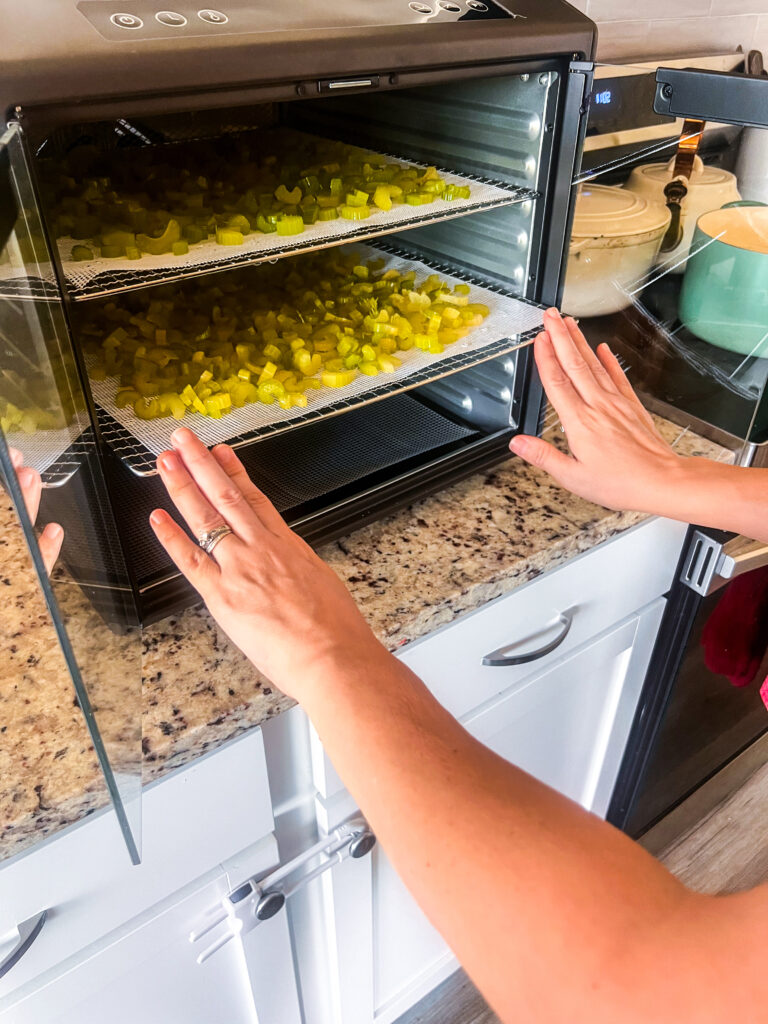
Drying food can be done without equipment. Such as picking herbs, peppers, etc, and hanging them to dry somewhere with good air circulation. However, dehydrating food is a different process requiring a food dehydrator that can be used for most other foods that cannot easily be dried by sitting out, or as a way to speed up the drying process.
“Food drying is a method of food preservation in which food is dried (dehydrated or desiccated). Drying inhibits the growth of bacteria, yeasts, and mold through the removal of water. Dehydration has been used widely for this purpose since ancient times; the earliest known practice is 12,000 B.C. by inhabitants of the modern Asian and Middle Eastern regions.[2] Water is traditionally removed through evaporation by using methods such as air drying, sun drying, smoking or wind drying, although today electric food dehydrators or freeze-drying can be used to speed the drying process and ensure more consistent results.[3]” (Wikipedia).
Dehydrating food is pretty much hands off and the result is a shelf-stable product to add to your pantry. We love the combination of simple and shelf-stable! This is another one of our favorite homesteading kitchen skills to learn.
Other homesteading kitchen skills to learn
Now, if you knew some of these skills already and had to skip them, learned the skills faster, or didn’t want to learn some of these, we have a list of other homesteading kitchen skills to learn next. These are just ideas to get you going!
- Make mozzarella
- Make your own raw dairy cultures
- Make yogurt
- Dry herbs and make homemade spice mixes
- Pressure can meals
- Freeze entire meals
- Make freshly milled grain breads and desserts
- Make homemade pastas
- Dehydrate homemade pastas
- Learn to use raw honey
- Learn how to steam juice
- Cook with fresh herbs
Conclusion
We hope you’ve enjoyed this post. As always, we want to equip modern families to live abundantly in their homesteads and homeschools no matter where they live and with no overwhelm or burn out. So, we try to provide simple solutions and simple resources, as well as links to other simple resources to help you on your adventure.
If you found it helpful, please share this post and subscribe to our newsletter for more simple solutions, free printables, resources, and encouragement!

Resources for you:
- Learn all kinds of Homesteading skills by the experts at the School of Traditional Skills
- Simple Sourdough Course by Lisa Bass from Farmhouse on Boone
- Fresh Ferments Course by Lisa Bass from Farmhouse on Boone
- Freshly Milled Grains Course by Lisa Bass from Farmhouse on Boone
- Affordable Resources in Our Shop
- Free Printables
- Sign up for our newsletter for more resources, tips, and encouragement straight to your inbox!
- Artiste Mixer
- Universal Plus Mixer Stainless Steel
- NutriMill Enameled Cast Iron Dutch Oven
- NutriMill Enameled Cast Iron Bread Pan
- NutriMill Harvest Grain Mill
- Other NutriMill Mills and Sourdough Products
- Sourdough Starter Kit
- Simple Food Dehydrator
Related posts:
- 5 Homesteading Skills for Beginners to Master First
- 4 Questions to Ask Yourself Before You Start Homesteading
- Using a Food Dehydrator the First Time: What to Expect that Most People Don’t Tell You
- 8 No-Waste Ways to Preserve Peaches
- 5 Reasons Enameled Cast Iron is one of the Best and Safest Cookware and Bakeware Materials
- How to Homestead through Transitions | Homesteading and Spiritual Encouragement
- 7 Ways to Create a Christ-centered Homestead
- 10 Ways to Save Money as a Large Family | Homesteading
- How to Make Raw Milk Butter WITHOUT a Churn
 5 Reasons to Start a Winter Garden
 4 Questions to Ask Yourself Before You Start Homesteading
 12 Simple Meal Planning Tips from a Homesteading, Homeschooling Mom of 7 for Stress-Free Meal Planning
 7 Ways to Create a Christ-centered Homestead | Homesteading & Christian Living
 15 Health Benefits of Raw Honey | Honey
 How to Flash Freeze Peaches: A Quick and Simple Way to Preserve Peaches | Homesteading Skills
 10 Ways to Save Money as a Large Family | Homesteading
 4 Herbs for Healthy Chickens | Raising Chickens
 Using a Food Dehydrator the First Time: What to Expect that Most People Don’t Tell You | Homesteading Skills
 How to Use Eggshells to Make a Calcium Supplement for Chickens | Raising Chickens
 How to Make Raw Milk Butter WITHOUT a Churn | Homesteading
 5 Reasons Enameled Cast Iron is one of the Best and Safest Cookware and Bakeware Materials | Homemaking, Natural Living, & Non-Toxic Living
 8 No-Waste Ways to Preserve Peaches | Homesteading & Sustainability
 5 Homesteading Skills for Beginners to Master First
 How to Homestead through Transitions | Homesteading and Spiritual Encouragement
 How to Keep Chickens Cool with Peppermint Infused Ice Cubes | Raising Chickens
Wow what a great list. Love how any of these can be done no matter where you live.
Glad you enjoyed this! We try to have a lot of ideas for people to homestead no matter where they live because we’ve spent more years in small acreage or neighborhoods than not, but have had the desire to homestead!
It’s crazy how much people spend eating out!! This list is great for all us kids and adults 🙂
It is! Glad you enjoyed it!