5 Reasons Enameled Cast Iron is one of the Best and Safest Cookware and Bakeware Materials | Homemaking, Natural Living, & Non-Toxic Living
Part of living abundantly in homesteading is also living a non-toxic lifestyle as much as possible. When you have a working kitchen constantly cooking, baking, and prepping your family’s food, you want to know that it is being safely prepared. In this post, you will discover 5 reasons enameled cast iron is one of the best and safest cookware and bakeware materials around.

This post may contain affiliate links. When you shop through them, it blesses our family in a small way at no extra cost to you. Thank you!
Hi, I’m Priscilla!
As a young, growing family facing job loss in 2013, with a toddler and a newborn baby, I wanted to learn how to grow food to supplement our rising grocery bill, but I had no experience. So, I called on my mom to help me start my first garden as cheap as possible. I remember her stewarding a small garden from time to time when I was growing up. We started one with blocks, soil, seeds, and a few starters that she helped me invest in. And that’s how I started!
Before I was a homesteading, homeschooling mom I was a professional musician and music teacher. I carried over my teaching experience into homeschooling my children, but I learned it was much different teaching your own children. And, when I started homesteading, I started with NO experience. It was something I never imagined doing. I had to do a lot of researching and learning each season. So, I know how hard it is to start homeschooling and homesteading with no experience!
After 2020
After the events of 2020, we saw the vital need to learn to grow and raise real God-given food in abundance, and continue homeschooling all of our children. We also learned about toxins in products and all the health problems they were causing. We felt God had a new call and season for us. So in 2021, we left everything behind, and moved from northwest Indiana to southern Georgia. And we just got started!
How we can help you
Now, I’ve homeschooled for 11 years and have 6 children of homeschool age with 1 more in waiting. And, we established our homestead in 2021 with lots of research and no experience. We built up gardens and livestock and had a small farmstead business within 2 years. We stewarded a small farmstead by selling fresh eggs and healthy chickens to many happy customers!
Also, we started taking and completing several homesteading courses, and we continue our education every year. And, I’m always looking for ways to make things more time efficient by making them simpler to do and sustainable. When things are simpler, they are more sustainable in our already full lives.
But, an unexpected turn of events landed us in a rental home in an HOA neighborhood while we search for land. We proved to ourselves that we could still homestead even with all the restrictions. We knew if we could do it, others could do it too! So, we started this blog and our newsletter to equip modern families to live abundantly in their homesteads and homeschools no matter where they live and with no overwhelm or burn out. NO EXPERIENCE NECESSARY! We offer simple and affordable solutions, free printables, resources, and encouragement for your Christ-centered beginner homesteading, homeschooling journey.
5 Reasons Enameled Cast Iron is one of the Best and Safest Cookware and Bakeware Materials
There are so many chemicals these days in cookware and bakeware that it can be so confusing to decide what brands and materials to buy to keep your family safe. We have tried a few non-toxic brands of cookware and bakeware so far, as well as some brands of quality cast iron. We have found that we really like some brands and not others.
Some were worth the investment, some were inexpensive and still fabulous, and some were not great in our experience whatever they cost. And, while we are not sharing all of our experiences in this post, we are going to cover why we believe that enameled cast iron is one of the best and safest cookware and bakeware materials that we prefer to use.
1. The enamel on enameled cast iron products is non-reactive.
Enamel is a glass coating and glass coatings are non-reactive. Non-reactive means that acidic foods do not affect the material, and metals or other substances will not leach into the food. There are so many chemicals these days in cookware and bakeware that it is great to have the peace of mind that the enamel is non-reactive.
2. High-quality enameled cast iron products are non-toxic.
High-quality, trusted brands are the best ones to buy enameled cast iron products from. This is because the enamel will be high-quality creating products made without harmful chemicals and toxic metals. Most high-quality, trusted brands test their enameled products to ensure they are non-toxic. Our favorite brand, NutriMill, states on their site about their enameled cast iron products:“Non-Toxic Enamel: Free of PTFE, PFOA, lead, and cadmium. Safe for you, your family, and your food.” We already loved Nutrimill for their high-quality grain mills, so we knew we could trust their new cast iron collection.
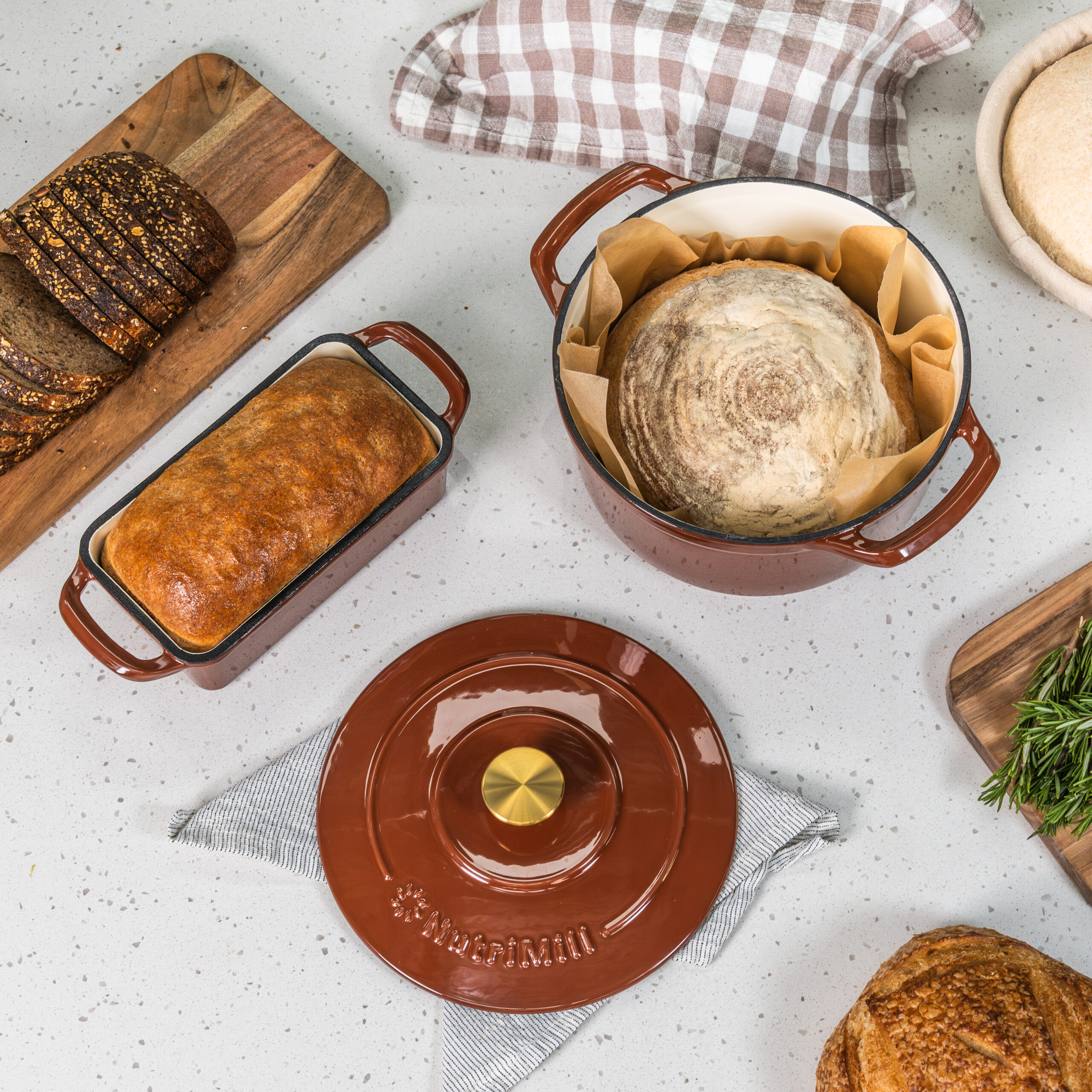
The enamel is also barrier.
Again, the enamel is a glass coating. So, as well as being naturally non-stick, the enamel acts as a barrier for the cast iron protecting the pan from becoming rusted. I personally love knowing that even though I get the even cooking from the cast iron material under the enamel, I do not have to worry about potential metals leaching from the cast iron.
Regular cast iron, especially low-quality products, are NOT all non-toxic and safe. Many brands still have a chemical coating, or rust easily causing metals and substances to leach into food. The enamel glass coating is a barrier that protects the cast iron from getting harmed or rusted, therefore it is also a barrier protecting your food. Even high-quality cast iron pans can rust even with good care, and rust is not safe. When a cast iron pan rusts, rust needs to be removed and the pan re-seasoned before considering it for cooking again.
3. Enameled cast iron products are non-stick and very easy to clean.
I’m a mom of 7 y’all, I don’t want to take time to scrub dishes unless I really have to. And, regular cast iron can be great, but I felt like I didn’t have time to scrape and maintain my prized cast iron pans. So, after I tried my first enameled cast iron dutch oven and it wiped clean easily, I was in love. I could cook all of my soups, stews, roasts, rices, and more without food getting stuck on and needing scrubbing.
The enamel, because it is a glass coating, is naturally non-stick making it very easy to clean. Especially if you just wash it right after it’s cooled down. Also, I use just a little bit of olive oil or butter at the bottom of anything I cook (not bake), but you don’t need nearly the amount you need in regular cookware.
4. Enameled cast iron products cook food evenly.
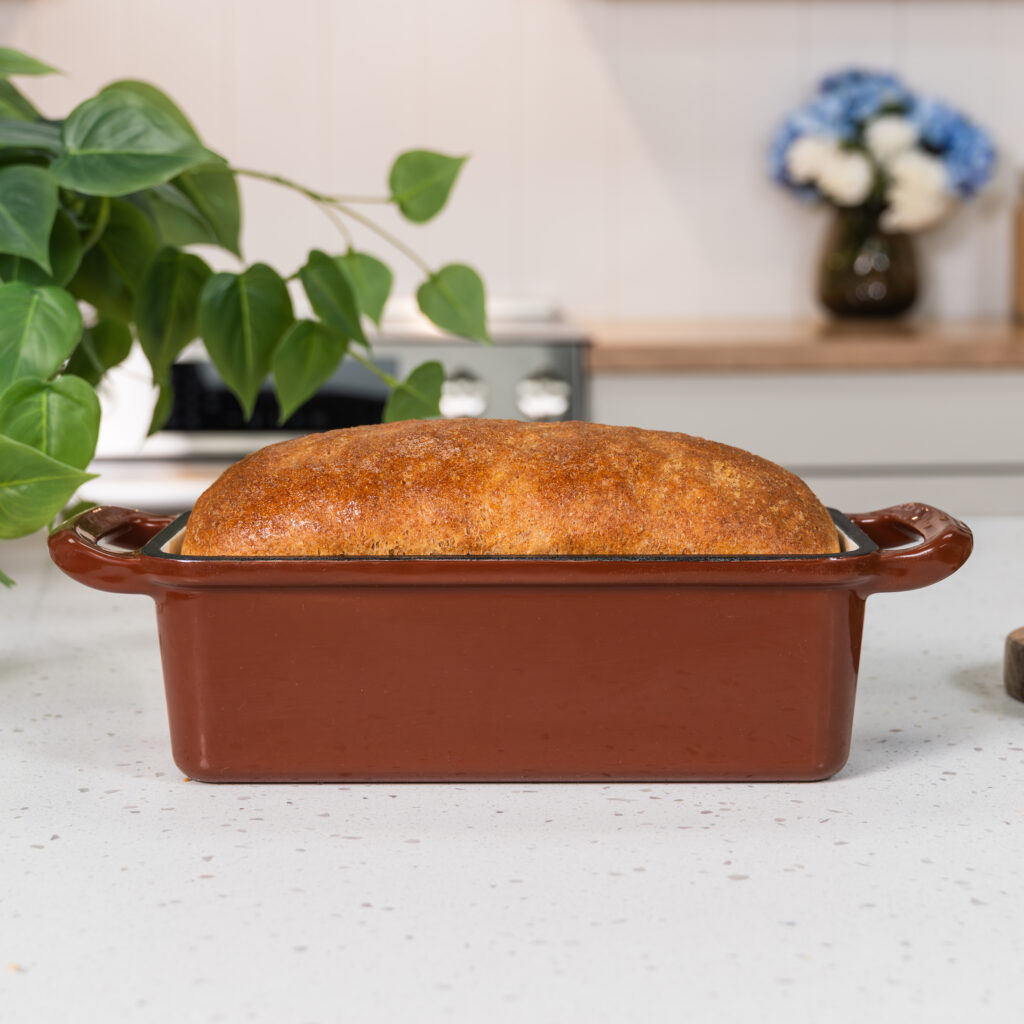
One reason why people love cast iron so much is because it is fabulous at cooking food evenly. Cast iron naturally distributes heat evenly and is very thick. Therefore, it has great heat retention, so no matter what you are cooking, you can trust everywhere on the cookware and bakeware will cook the same. Add the non-toxic, naturally non-stick enamel to the cast iron and it is easily a favorite material. This is why I love my enameled cast iron bread pan and dutch oven. It is my only bread pan that cooks evenly and thoroughly every time.

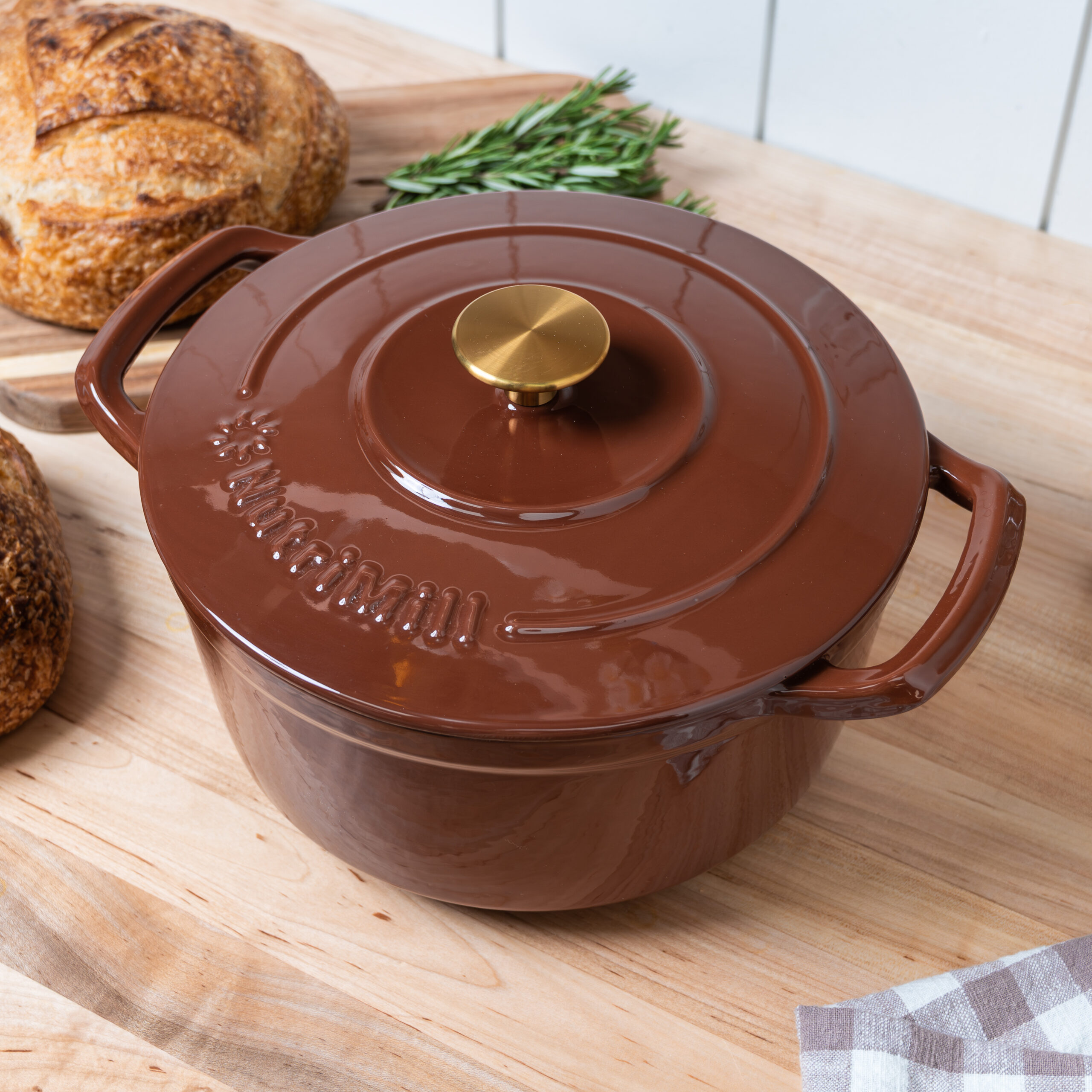
And, my dutch oven is great for soups, stews, and more, but I actually love it for sourdough bread baking and freshly milled flour baking! This is because of the awesome heat retention of both, and the environment that the dutch oven creates to ensure my sourdough cooks all the way through. Prior to using the dutch oven for sourdough bread, my sourdough bread was often coming out doughy and uncooked in the middle.
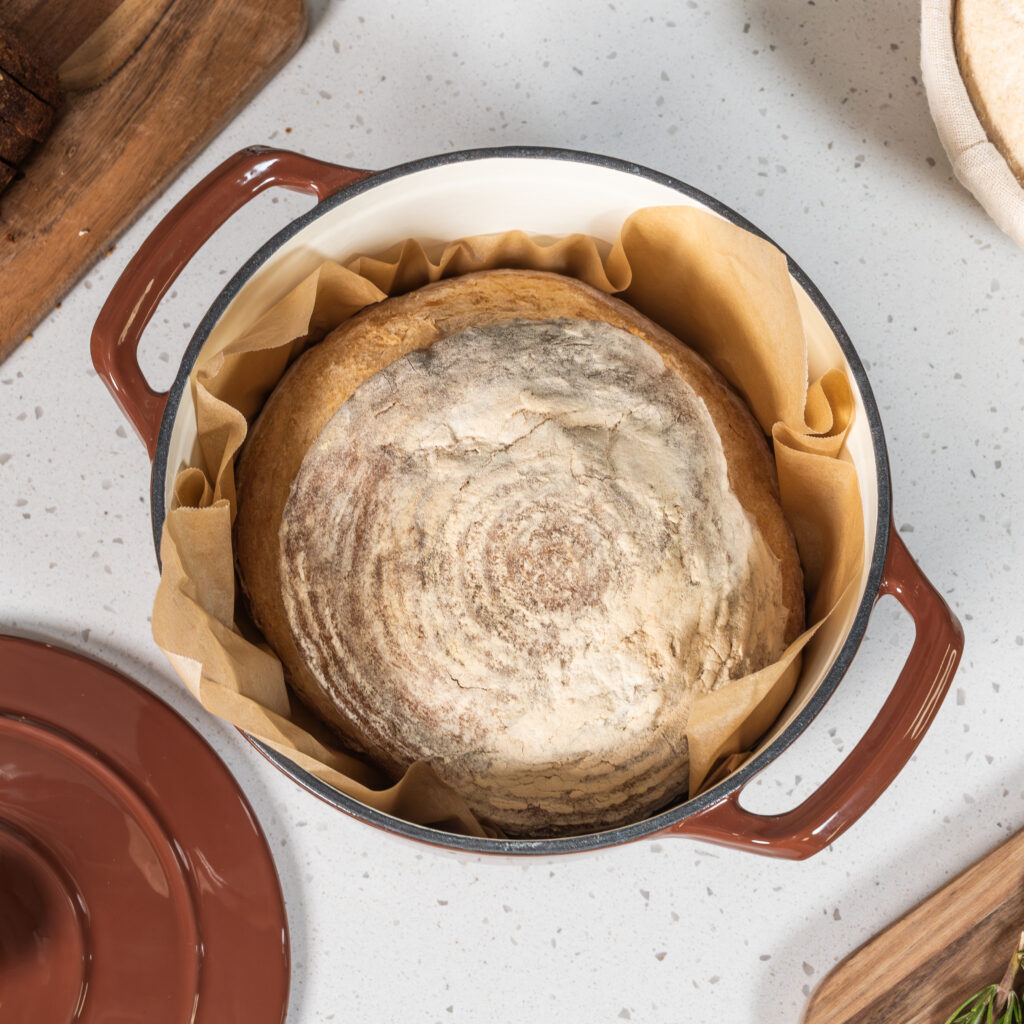
5. Enameled cast iron products are durable and can last a long time.
Cast iron products can last a long time when they are well taken care of. Cast iron is very thick, and can handle high temperatures over and over again. So, it won’t warp! Cast iron is known for its potential to last generations. Enameled cast iron products can last just as long, but because of the enamel are even easier to clean and maintain!
How to care for enameled cast iron to help it last:
Besides using a little oil and cleaning it once cooled, another way to take care of enameled cast iron products is to only use wooden, plastic, nylon, or silicone cooking utensils to prevent scratching. Also, only use non-scratching cleaning cloths when washing, as well as non-abrasive dish soap. Non-toxic dish soaps are non-abrasive, and most silicone and wooden utensils are non-toxic. So, if you’ve been on your non- or low-tox journey you may already be equipped with all you need to care for enameled cast iron products.
Uses for an Enameled Cast Iron Dutch Oven
An enameled cast iron dutch oven can be used on a stove-top on a burner about the size of the bottom. It can also be used directly in an oven (check your products’s manual or description for how high of a temperature it can handle). Cast iron products are not microwave-safe and often not freezer-safe, but check your manual or description. An enameled cast iron dutch oven can be used for:
- Soups
- Stews
- Chilis
- Roasts
- Chicken
- One-pot meals
- Sourdough bread baking
- Fresh milled flour bread baking
- Any homemade bread baking
and more!
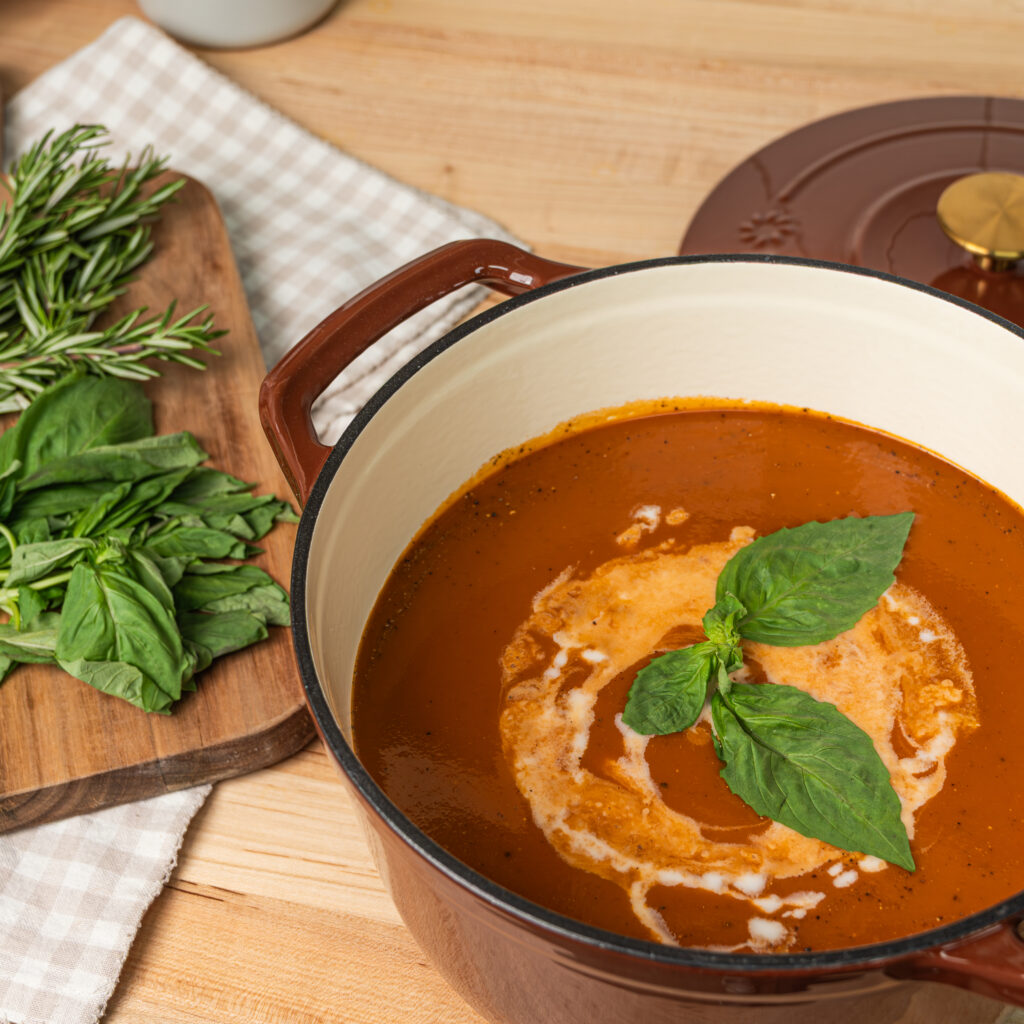
Uses for an Enameled Cast Iron Bread Pan
Enameled cast iron can be used on a stove-top, but a bread pan is not typically used on a stove. So, an enameled cast iron bread pan is typically used safely in the oven. Check your product’s manual or description for the temperature limits. Enameled cast iron bread pans can be used for:
- Homemade breads
- Sourdough breads
- Freshly milled flour breads
- Sweet breads like banana bread and zucchini bread
- Meatloafs
and more!
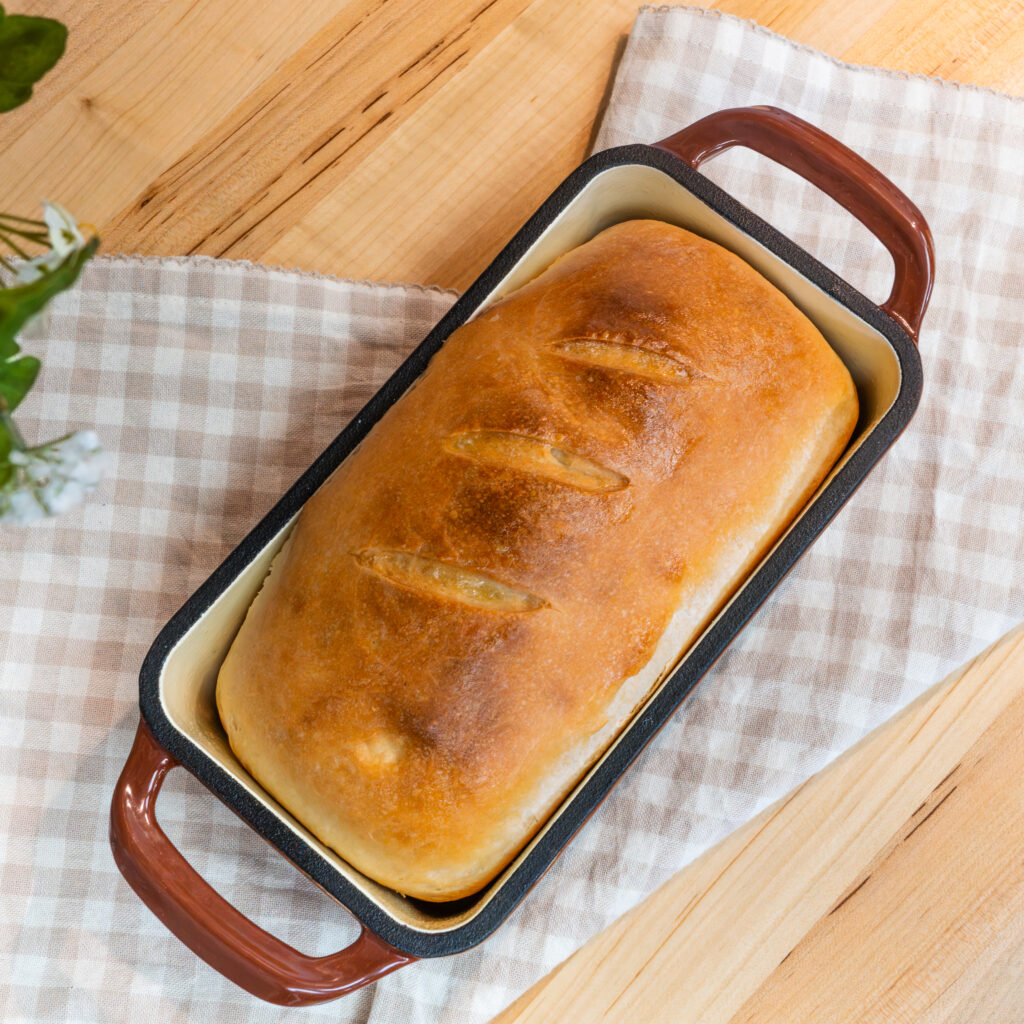
Basic Care and Safety for Enameled Cast Iron Products
Disclaimer: Always check your product’s manual, paper, or description for specific care, use, and safety instructions.
Cleaning
Most enameled cast iron products require that you wash them by hand with warm water and non-abrasive soap. If food is stuck or baked on the product a short, warm soak is usually all it takes to loosen the leftover food and wipe clean. It is also important not to use any scrubbers or rough cloths. I just use a regular soft dish cloth and a non-toxic dish soap.
Safety
For cooking with an enameled cast iron dutch oven on the stove the burner needs to be about the size of the bottom of the dutch oven. It can be used on an electric cooktop, but just avoid sliding the pot around the cooktop to help avoid any scratches to your cooktop or pot. If cooking on a gas stove it is important to keep the flame under the pot and not around it. No matter what type of stove it is used on, do not forget to use pot holders for touching the handles and the knob on the lid. These parts get hot, and on most cookware they do not, so it can be a habit to reach for a handle or lid without a pot holder.
Again, it is not safe for the microwave. It is safe when used in the oven, but don’t forget to use pot holders again. Check your manual for temperature limits and avoid any extreme changes in temperature to avoid warping.
Enameled cast iron products require the use of wooden, plastic, nylon, or silicone cooking utensils. We recommend wooden or silicone utensils for non-toxic options, however, be aware that silicone cooking utensils (if not stated by the brand) sometimes cannot efficiently work with enamel or at as hot of temperatures as wooden options. In my case, I have never had an issue with my non-toxic silicone cooking utensils whether it was for non-toxic ceramic surfaces or for enameled cast iron.
More Safety Tips
Most products warn to keep children away from cast iron and enameled cast iron products because of the high heat retention. Although I teach my children to bake and cook I also do not allow them to use the enameled cast iron dutch oven yet. It gets very hot, and with no safe handles, I do not want them to make a mistake and burn themselves because I did when first using cast iron. Of course I’m sure they can learn at an age you feel appropriate, but I have found even the products to come through my oven mitts a bit. So, just a safety concern there. Another thing is to look out for knobs on lids to get loose.
And, we will say it again. Avoid cracking and chipping of the enamel by not using incorrect cooking utensils, scrubbers, or abrasive soaps. Once enamel begins to crack and chip, it can be okay, but it poses the risk of exposing the cast iron which can lead to rusting and the issues we listed with that earlier. Once enamel begins to chip and crack, it is prone to chip and crack more and easier. So, it is best to take care of your enameled cast iron products well which is quite easy.
Conclusion
Hopefully, you can see why we love enameled cast iron for cooking and baking. It is non-reactive, non-toxic, naturally non-stick, easy to clean, cooks food evenly, durable, and lasts a long time. There are more reasons to love enameled cast iron, but these are our top 5 that really helped us choose it as a cooking and baking material. We have peace of mind whenever we use enameled cast iron products for cooking and baking knowing we are protecting our family’s food and health. Living a non-toxic lifestyle as we change things little by little alongside growing and making our own nutrient-dense food helps us live more abundantly! So, we hope this was helpful to you in considering enameled cast iron as a cookware and bakeware material for your family.
Live abundantly, Friends!

Shop this post
Shop the products in this post through our links below and get a $20 discount on select collections (like mixers and grain mills)!
- The NEW NutriMill Cast Iron Dutch Oven
- The NEW NutriMill Cast Iron Bread Pan

 Free Planner for Christian Moms | Printable Planning Pages
 12 Homesteading Kitchen Skills to Learn in 12 Months or Less
 5 Reasons to Start a Winter Garden
 How to Keep Chickens Cool with Peppermint Infused Ice Cubes | Raising Chickens
 How to Make Raw Milk Butter WITHOUT a Churn | Homesteading
 Simple Immune-Boosting, Natural Cough Syrup Recipe
 12 Tips for a Nourishing Fall Routine for Christian Homeschool Families | Homeschooling & Routines
 Sourdough Crepes Recipe for a Large Family | Homesteading Recipes for Large Families
 7 Ways to Create a Christ-centered Homestead | Homesteading & Christian Living
 12 Simple Meal Planning Tips from a Homesteading, Homeschooling Mom of 7 for Stress-Free Meal Planning
 3 Quick Mindset Shifts for Success in Summer: from Overwhelmed to Overjoyed as a Christian Homesteading, Homeschooling Mom
 4 Questions to Ask Yourself Before You Start Homesteading
 10 Ways to Save Money as a Large Family | Homesteading
 15 Health Benefits of Raw Honey | Honey
 How to Homestead through Transitions | Homesteading and Spiritual Encouragement
 Quick and Easy Homemade Enchilada Sauce | Recipes for Large Families
 4 Herbs for Healthy Chickens | Raising Chickens
 Using a Food Dehydrator the First Time: What to Expect that Most People Don’t Tell You | Homesteading Skills
 How to Use Eggshells to Make a Calcium Supplement for Chickens | Raising Chickens
 8 No-Waste Ways to Preserve Peaches | Homesteading & Sustainability
 4 Keys to Accomplishing All Your Goals This Year
 5 Homesteading Skills for Beginners to Master First
 Sweet and Creamy Protein-filled Oatmeal Recipe for Large Families (FREE Recipe Cards) | Recipes for Large Families
I didn’t realize this about enameled cast iron. I’m excited to get some now!
I am so glad you were able to learn about the benefits! We hope you love your enameled cast iron journey as much as we do!
Hmmm, now I have something else to add to my Christmas list this year 😉
Lol! Yes, I am hoping to add a few more to my collection as well!
My enamel cooking pot has been a staple in my kitchen for years! I loved reading about the benefits. Thank you for this post!
So glad! Thank you for reading and commenting!
I’m just getting into cast-iron cooking & baking so this was a great post for me!
I am so glad this was a helpful post for you! And, I hope you enjoy the adventure!
Great read, so informative! This will be my next investment!
So glad you found this informative!